The Other Type of Data Center Noise
I just posted about the failure of a “Data Center Noise Ordinance” because it didn’t adequately account for low frequency sound. Low frequency noise is by far the most common type of noise complaint from data centers: they have long wavelengths, travel long distances, and can bend around obstacles.
However, of course as soon as I posted that I also came across this Politico story about a high-pitched whine from a data center next door. So should we be equally concerned about high-frequency noise?
In general, no: this particular data center seems to have been running its backup diesel generators, which caused the high-frequency you can hear in the video linked in the story. This is likely because those diesel generators use a turbocharger compressor, which generates a resonant frequency at the Blade Pass Frequency. You can see in the animation below how this leads to a high-frequency pressure oscillation:
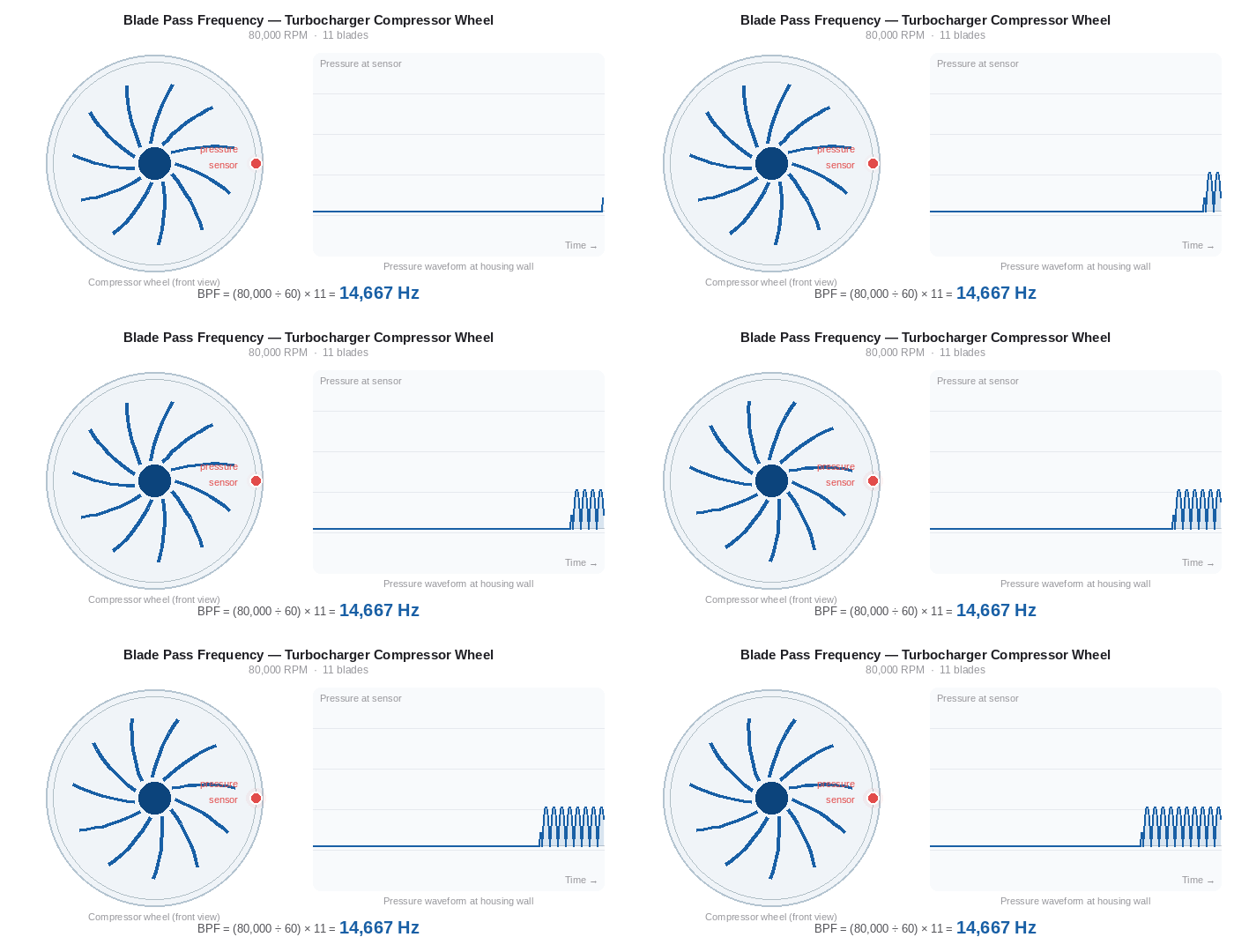
Animation Showing Blade Pass Frequency in a Diesel Turbocharger
High-frequency noise is essentially the opposite of low-frequency noise: where low-frequency noise is diffuse and subtle, high-frequency noise is intense and local. It doesn’t travel so far, and is more easily blocked by obstacles or absorbed by the air. Thus the noise mitigation solutions will be different for this case. Unlike most data center noise issues, this is also an area where the A-weighted dB rating will be useful for quantifying annoyance.
However, backup generators usually only run during emergencies or brief testing periods, so they’re not likely to be the main noise complaint for most data centers. But since Loudoun County has 200 data centers at the moment, we are bound to have some high-frequency issues here and there.